Time to Sow the Cucurbits
Chris runs us through planting up cucurbits, the collective term for some tasty vegetables including courgettes, pumpkins & cucumbers!
Cucurbits is the collective term for a group of plants which are botanically classified as fruits but are mostly cooked and eaten as vegetables. Among them is my must have vegetable for the taste of summer the zucchini or courgette, closely followed by a freshly picked cucumber. What could be better than a glass of Pimm’s containing the flavours of a home-grown cucumber compared to the watery tasteless specimens bought from supermarkets!
Other members of the family include Pumpkin, Squash and the ultimate challenge for growers the melon, indeed historically a Head Gardeners worth was measured on their ability to grow Melons and Pineapples, if you could grow both you were very much sought after and could command a better wage. Cucurbits are quick growing so it is important not to sow them too early, they won’t thank you for planting them into cold soils and unless the greenhouse is heated planting cucumbers before Mid-May can be challenging in some years when late frosts threaten.
It’s often more advantageous to sow later when warmer weather arrives than to sow early and plant into cooler conditions which could check growth and cause root rot from which they never really recover. Cucumbers planted direct into soil can be really temperamental and literally stop growing and wilt if the soil is too cold. Later sowings and plantings will always catch up and usually outperform earlier ones.
Here in North Shropshire, I find mid-April is soon enough to sow Courgettes, Marrows, and Squash that will be planted out under cloches or fleece in Mid-May and sowings around May 10th for plants to plant out unprotected in Early June.

For Cucumbers that are destined for the cold greenhouse I generally sow late April, I could sow a couple of weeks earlier but there is usually too much demand for propagator space at that time! A heated propagator is a must for melons and cucumbers as they will need a minimum of about 25 degrees C to germinate quickly, if lower temperatures are provided expect some losses as the seed will usually rot. Marrows/Courgettes, Pumpkins and Squash require around 21 degrees C and for me these go into the propagator for the April sowings but for May sowings I will get virtually 100% success by just placing the trays on the benching.
F1 Hybrid Cucumber seed is very expensive over the years I have developed mainly by trial and error, a very specific way of sowing cucumbers and melons that never fails even with seed a few years old. The trick is to provide conditions to germinate quickly and then grow on without checking the plants.
This is the reason I direct sow into 10 cm pots, of peat or coir-based compost which has been pre-watered with warm to hot water. Whilst the compost is still steaming I dib a small hole in the middle of the pot about 10mm deep and sow one cucumber seed on edge. Sowing on edge really does help to stop the seed rotting. I cover the seed with a pinch of vermiculite for good oxygen circulation around the seed which is needed for respiration during germination. Once sown, the pots are immediately placed into the propagator. They will usually be up and away in about 4-5 days but if the weather is hot and the seed is of good quality they might even show in around three!
Marrows, Courgettes, Pumpkins and Squash, I sow direct into 20 Cell tray inserts where they will stay until planting outside when they have around two true leaves. I prepare the compost in exactly the same way as for the Cucumbers and Melons, but cover the seed with a pinch of compost rather than vermiculite as they tend to be less fussy with their requirements.
You can always pot the young cell grown plants on into 10cm pots if the weather turns cold and wet when they are ready to plant out, but if good planting conditions prevail don’t hesitate to plant as keeping them too long in the trays is very detrimental to the plants as they will quickly outgrow the cells.
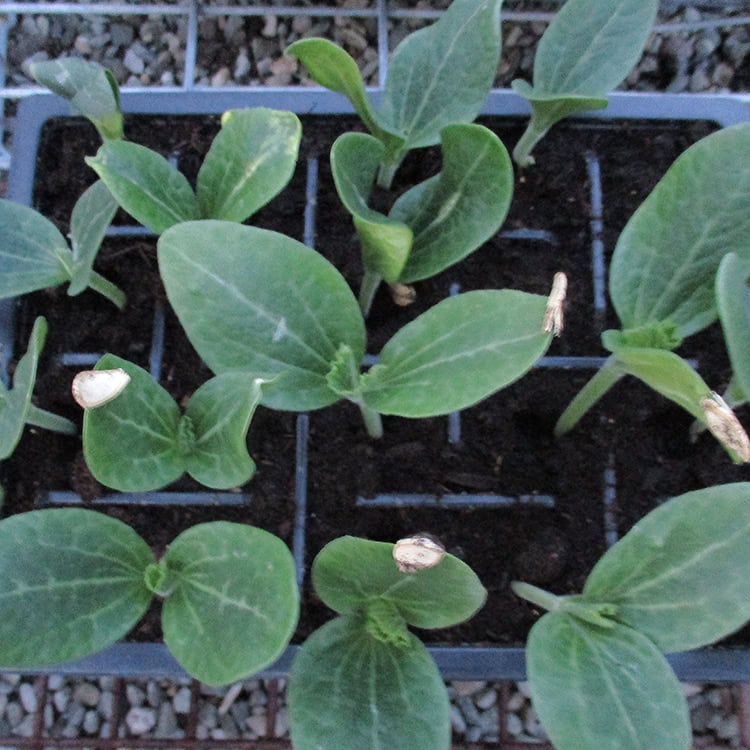
Marrows were probably the first vegetable plants I grew as a child and I can certainly remember taking huge marrows which I could barely carry to harvest festivals whilst in primary school. Marrows are really easy to grow and along with Pumpkins can be sown direct into the outdoor soil in late May – they are great to engage children in growing food as they rarely fail.
My top choices of cultivars are in the list below; these I have found to give reliable results even when weather conditions are not ideal. For Cucumbers I grow only F1 hybrids for yield and to help combat powdery mildew which is very problematic later in the season. It really is worth spending that bit extra as you can also be sure the hybrids will produce only female flowers totally avoiding any bitter fruits which you get on older cultivars (which also have male flowers on them) when the flowers are fertilised. F1 Hybrids are also really worth obtaining for Courgettes from a yield perspective but some of the best flavours are found in the older open pollinated cultivars. For Squash, the choice is huge, Butternut squash is certainly more productive as an F1 but for shear novelty open pollinated cultivars with their range of sizes, shapes and specific flavours can’t be beaten.
Cucumber: Femspot F1, Carmen F1, Euphya F1
Marrow: Tiger Cross F1
Courgette: Ambassador F1, Alberello di Sarzana
Pumpkin: Cargo F1
Winter Squash: Buttercup, Musquee du Provance, Jumbo Pink Banana, Hunter F1, Walnut F1,
Melon: Honeydew, Sugar Baby. (if you like a real challenge!)

Chris Jones
Based in Shropshire Chris has many years experience both in growing projects of his own and passing on his expert outdoor knowledge to others through growing and gardening societies. Keep an eye on our blog posts and newsletters for his seasonal articles to keep you well informed on all things outdoors.





About Elixir Gardens
For over 30 years Elixir Garden Supplies have been providing gardeners with all the essentials they need to achieve growing.
Our online store makes sure that all our customers have access to the information they need to make the right decisions when choosing the products they need for their gardens. We know from experience that gardening means many different things to our customers. Whether you have a balcony, patio, lawn or allotment, Elixir Gardens are proud to supply both amateur and professional gardeners alike.
We regularly use our many years of experience to developed our exclusive formulations in specialist fertilisers. Many of these have stood the test of time and have become firm favourites with amateurs and professionals alike. In fact our knowledge of fertilisers, feeds and garden care is well known within gardening circles. But don’t just take our word for it, why not check out the thousands of fantastic reviews on Trust Pilot.
