When Do Plants Need Protection?
Learn when plants need protection from frost, cold winds and winter weather, which plants are most vulnerable and how to use fleece, greenhouse insulation and heating.
Plants need protection when weather conditions are likely to exceed what that particular plant can safely tolerate. In the UK, this most commonly means frost, freezing temperatures, cold winds and sudden temperature drops, although newly planted specimens, seedlings, cuttings and container-grown plants can become vulnerable before established hardy plants do. Protection should therefore be based on the plant, its growing stage and the forecast, rather than simply covering everything on a particular date. Elixir Gardens 17gsm Frost Fleece provides a simple first layer of protection for vulnerable plants, while greenhouse growers can combine frost fleece with bubble insulation and TH0 or TH0-B Tube Heaters when more substantial winter protection is required. Elixir’s Greenhouse Frost Protection Kits bring these elements together for overwintering tender plants and protecting seedlings.
Quick Answer
- Frost is forecast
- Temperatures are expected to fall close to or below freezing
- Tender plants remain outdoors in autumn
- Young plants or seedlings face a cold spell
- Newly rooted cuttings are exposed to very cold weather
- Newly planted specimens haven’t established fully
- Container-grown plants are exposed to prolonged cold
- Roots in pots are vulnerable to freezing
- Cold, drying winds are forecast
- Plants have recently produced tender new growth
- A warm spell is followed by a sudden cold snap
- Tender plants are being overwintered in a greenhouse
- Greenhouse temperatures may fall below the minimum required by the plants
- Extended periods of frost are forecast
- Plants are positioned in exposed locations or frost pockets
- Cold sensitive crops are still growing late in the season

Do Not Protect Plants By The Calendar Alone
UK weather varies widely between regions, gardens and even different areas of the same garden. Coastal locations, sheltered urban plots, exposed rural sites, altitude and local topography can all affect when frost arrives and how severe it becomes. Use autumn as a reminder to prepare your materials, but make the final decision from local forecasts, actual garden conditions and the hardiness of each plant. Low-lying areas can form frost pockets because cold air settles there, so plants in one part of a garden may need protection before identical plants growing beside a wall or hedge.
Frost is one of the clearest triggers because freezing conditions can damage tender plant tissue, causing blackened, brown, limp, water-soaked or collapsed growth. Protection needs to be in place before this injury occurs, fleece cannot reverse tissue damage the following morning. A useful sequence is Forecast, Prepare, Protect, Frost and Inspect. When the forecast is close to freezing, also allow for local microclimates, as a sheltered weather station and an exposed garden bed may experience different minimum temperatures.
Which Plants Are Most Vulnerable?
Not every plant requires frost protection. Established hardy plants are adapted to normal cold conditions and often need little intervention, although severe weather, recent planting, containers or soft new growth can temporarily increase their vulnerability. Half-hardy plants usually tolerate cool conditions but may be damaged by frost, while tender plants can be seriously injured or killed at relatively low temperatures and may need to be moved under cover. Where plants need a little extra protection outdoors, covering them with frost fleece can help provide an additional layer against cold conditions. Elixir’s Frost Fleece is available in a range of sizes for protecting vulnerable plants when frost is forecast. Always check the species and variety rather than assuming that every plant in a broad category has the same tolerance.
Growing stage matters as much as the label ‘hardy’ or ‘tender’. Seedlings and newly rooted cuttings have delicate tissue, small root systems and limited stored energy; recently planted shrubs and perennials have not yet established a broad root system; and young spring growth or open fruit blossom may be much more frost-sensitive than the same plant while dormant. Vegetable crops also vary considerably, although salad crops and tender young vegetables can benefit from a protected microclimate when a late cold spell is expected.
When Do Potted And Newly Planted Plants Need Protection?
Roots in containers have less surrounding soil to insulate them than roots in the ground, and the compost can cool from the top, bottom and sides. Before covering the foliage, move suitable pots against a sheltered wall, into a greenhouse or cold frame, or into another appropriate protected space. Grouping containers can reduce exposure, while insulating suitable pots and raising them to keep drainage holes clear can protect the root zone from freezing and waterlogging. Continue to check the compost because many plants use less water in cool weather and saturated roots can be as damaging as low temperatures.
Newly planted specimens, recently divided perennials and autumn-planted shrubs deserve similar attention because their roots have not yet spread fully into the surrounding soil. Shelter them from cold winds, check that the ground drains freely and use a suitable mulch where appropriate to protect the soil surface and root zone. Keep mulch away from vulnerable stems and crowns, and support plants that could be rocked by wind before the root system is secure.
Using Frost Fleece For Temporary Protection
Elixir Gardens 17gsm Frost Fleece is suitable for winter protection of plants, seeds, cuttings and general overwintering. The lightweight material allows sunlight, air and moisture to pass through while creating a protective layer around vulnerable plants. It can be laid over suitable emerging crops and seed beds, draped over plants or supported above delicate specimens, making it useful for potted shrubs, salad crops, seedlings, cuttings and greenhouse plants. Install temporary protection during daylight and before temperatures fall significantly, then secure it carefully so wind cannot lift it or rub it repeatedly against fragile growth.
Fleece may be enough for relatively hardy plants during a brief, mild frost, but it should not be treated as a guarantee against every winter condition. More tender plants, several consecutive freezing nights or a very exposed site may require a layered approach that combines shelter, insulation, fleece and controlled heat. During milder periods, inspect the plants and adjust or temporarily remove protection where appropriate to improve airflow and light; a permanently sealed, damp environment can encourage condensation, mould and rot.
Best for: vulnerable outdoor plants, potted shrubs, salad crops, seed beds, seedlings, cuttings, greenhouse plants and short periods of cold weather. Why choose it: it provides a lightweight protective barrier without completely excluding light, air or moisture. Recommended when: frost, cold wind or a sudden temperature drop is forecast and the plants need temporary additional protection.
When Do Greenhouse Plants Need Protection?
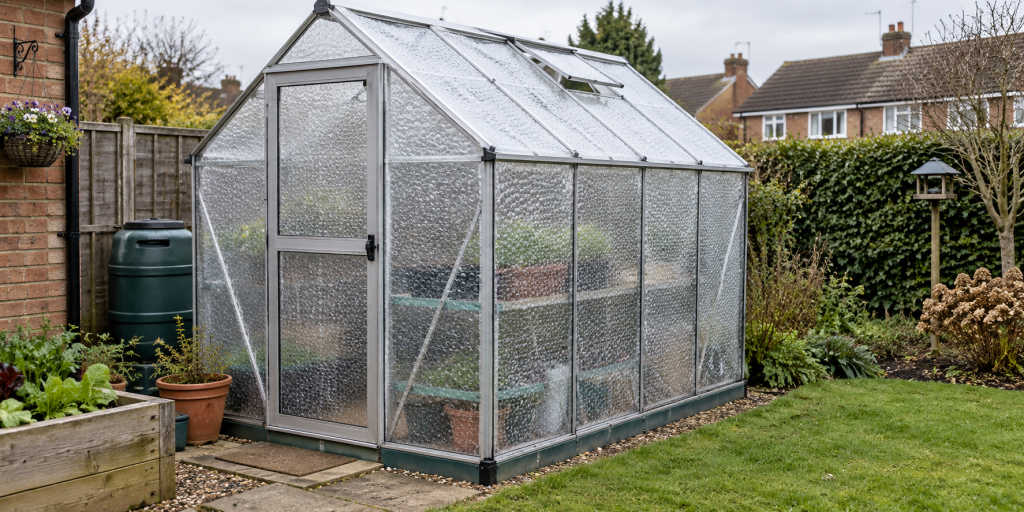
An unheated greenhouse provides shelter but is not automatically frost-free. Tender plants, seedlings and cuttings may need additional protection whenever the minimum overnight temperature approaches the lowest level they can tolerate. Use a minimum and maximum thermometer or suitable monitoring equipment, because the coldest point of the night is usually more important than the warmest afternoon temperature. Bright winter sunshine can also raise greenhouse temperatures quickly, so ventilate during suitable weather and monitor condensation rather than keeping the structure sealed continuously.
Start with passive measures: repair gaps, reduce unnecessary heat loss with suitable greenhouse insulation, group vulnerable plants and add frost fleece around individual specimens. Supplementary heating becomes relevant only when those measures are unlikely to maintain the minimum temperature required by the plants. If only a small group needs warmth, create a smaller protected zone rather than heating the whole greenhouse unnecessarily, and use a thermostat or other appropriate control where accurate temperature management is required.
Protection From Wind Wet Weather Snow And Spring Frost
Plants sometimes need protection even when a hard frost is not forecast. Cold, drying winds can increase moisture loss, scorch evergreen foliage and rock newly planted specimens, especially when cold or frozen soil restricts the roots’ ability to replace lost water. Prolonged rain can leave roots saturated, so keep container drainage holes clear, raise suitable pots where necessary and consider the drainage of beds as well as the air temperature. Heavy snow may bend branches, damage delicate plants, overload greenhouse roofs and collapse poorly supported fleece, so inspect structures and supports before severe weather arrives.
Protection may also be required in spring. A mild spell can encourage tender shoots, emerging leaves and blossom, which may then be damaged by a late frost even though the parent plant survived winter without difficulty. Continue monitoring the forecast after growth restarts, particularly around fruit blossom, bedding plants, young vegetables and recently planted specimens. Remove or reduce temporary winter protection only when the immediate risk has passed, and keep materials ready in case cold weather returns.
Create A Plant Protection Priority List
Protect tender plants first because they may not tolerate frost at all. Next, check vulnerable plants such as seedlings, cuttings, young or recently planted specimens, containers, plants with fresh new growth and those in exposed sites or frost pockets. Established hardy plants normally sit lower on the list, but their condition should still be reviewed during unusually severe or prolonged weather. This priority system helps concentrate fleece, greenhouse space and heating where they will make the greatest difference.
A 10 Step Plant Protection Plan
- Identify the plants and varieties you are growing
- Research their cold tolerance and minimum temperature needs
- Prioritise tender and vulnerable plants before established hardy specimens
- Monitor local forecasts and the minimum temperature in protected spaces
- Move suitable containers into sheltered positions before severe weather
- Repair and insulate the greenhouse or protect exposed containers where appropriate
- Apply suitable frost fleece before temperatures fall
- Add controlled background heat only when passive protection is insufficient
- Inspect temperature, ventilation, drainage, moisture and plant condition regularly
- Remove, replace or increase protection as the weather and plant growth change
15 Signs Your Plants May Need Protection
- Frost is forecast or the predicted temperature is close to freezing
- The plant is tender, half-hardy or has been damaged by similar weather before
- It has recently been planted, transplanted or divided
- It is growing in a container with an exposed root ball
- It is a seedling or a newly rooted cutting
- Fresh, soft growth or fruit blossom has appeared
- A sudden cold snap is expected after mild weather
- Several freezing nights are forecast rather than one brief frost
- The plant is positioned in a frost pocket or exposed part of the garden
- Cold, drying winds, heavy snow or prolonged wet conditions are expected
- The greenhouse is approaching the minimum temperature required by the plants

Common Mistakes to Avoid
The most common mistake is waiting until after a frost has caused visible damage. Other problems include covering every plant without checking its hardiness, leaving fleece loose in strong winds, protecting foliage while ignoring frozen or waterlogged roots, and assuming that an unheated greenhouse will always remain above freezing. Avoid heating more space than necessary, but do not rely on insulation alone when the plants require a higher minimum temperature.
Too much protection can also create difficulties. Poor ventilation, condensation, damp foliage, excessive watering and stagnant air encourage mould and rot, while winter sunshine can make a sealed greenhouse unexpectedly warm. Check protected plants regularly, ventilate during suitable conditions and water according to the plant and growing medium rather than following a fixed summer routine.
Greenhouse Frost Protection Kit
Best For:
Our Frost Protection Kit is best for Gardeners who want a complete solution for protecting greenhouse plants from cold temperatures and frost during the colder months.
Why Choose This Product:
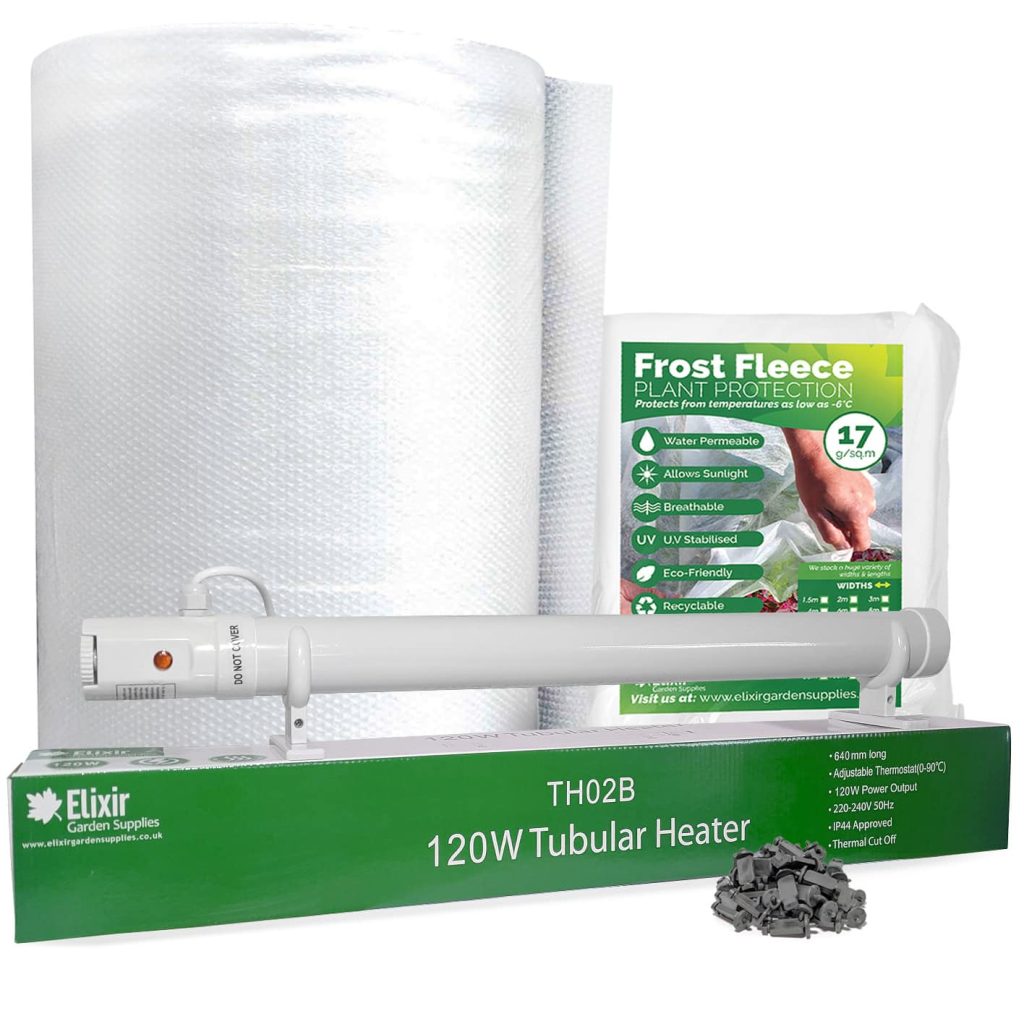
The Greenhouse Frost Protection Kit combines tube heating with greenhouse insulation and frost fleece, helping to reduce heat loss while providing additional background warmth. It offers a convenient way to bring several elements of greenhouse winter protection together in one kit.
Recommended When:
Choose this kit when preparing a greenhouse for autumn and winter, particularly when the aim is to maintain above-freezing temperatures and protect plants from frost. It is especially useful when combined heating and insulation are preferred over purchasing individual components separately. Always follow the product instructions for installation and use.
TH0 Tube Heaters
Best For: Providing gentle background heat and frost protection in greenhouses, sheds, workshops and other areas where maintaining a more stable temperature is important.
Why Choose This Product: The TH0 range combines tube heaters with protective guards and thermostat control, providing a practical way to manage low temperatures while helping protect plants and sensitive areas from cold conditions. The heaters are available in different sizes and wattages, making it easier to choose an option suited to the space being protected. The guards also provide an added layer of protection around the heater.
Recommended When: You need reliable background heating during colder periods, particularly for greenhouse frost protection, overwintering plants or helping maintain temperatures in small enclosed areas. Thermostat control is particularly useful when you want the heater to operate only when temperatures fall below your chosen setting.

Frost Fleece Plant Protection
Frost Fleece Plant Protection
Best For: Protecting plants, shrubs, young trees and other vulnerable garden plants from frost, cold winds and harsh winter weather.
Why Choose This Product: Elixir Frost Fleece provides a simple way to add an extra layer of protection around plants during periods of cold weather. It helps shield plants from frost and drying cold winds while still allowing air and moisture to pass through. It is available in a range of sizes, including 1.5m, 2m, 3m, 4m, 6m and 8m lengths, making it suitable for protecting individual plants as well as larger areas.
Recommended When: Temperatures are expected to fall below freezing, during periods of cold or drying winds, or when protecting less hardy plants through autumn and winter. It can also be useful for giving newly planted or particularly vulnerable plants additional protection during periods of unsettled winter weather.

Summary
Plants need protection when their environment is likely to become more severe than they can tolerate, not simply because winter has arrived. Hardiness, plant age, root establishment, containers, new growth, wind exposure, frost pockets and the duration of cold all affect the level of protection required. For many plants, Elixir Gardens Frost Fleece is a useful first line of defence, while greenhouse plants can be protected more comprehensively by combining fleece with insulation and, where necessary, controlled background heating from a suitable tube heater.
Frequently Asked Questions
At What Temperature Do Plants Need Protection?
There is no single temperature that applies to every plant. Base the decision on the cold tolerance of the species or variety, its growing stage and local conditions.
Should I Cover Plants At 5°C?
Not automatically. Many plants tolerate 5°C without difficulty, although particularly tender plants may require warmer conditions.
Should I Cover Plants At 0°C?
Frost-sensitive plants should already be protected before temperatures reach freezing, especially where local frost pockets may become colder than the general forecast.
When Should I Put Frost Fleece On?
Install temporary fleece before forecast frost, severe cold or damaging wind reaches the plant, preferably during daylight so it can be positioned and secured correctly.
Can I Leave Frost Fleece On All Winter?
That depends on the plant and weather. Inspect plants regularly and remove or adjust temporary protection during milder periods when greater airflow, light or access is beneficial.
Do Potted Plants Need More Frost Protection?
They often do because container roots are exposed to cold from several directions and have less soil around them than roots growing in the ground.
Follow the Instructions
Every gardening product is designed to be used in a specific way. Always read the product label and follow the manufacturer’s instructions before use. Correct preparation, application and timing help ensure the best possible results while promoting safe and responsible use.
Wear Appropriate PPE
Some products may require suitable personal protective equipment (PPE) during handling or application. Depending on the product, this may include gloves, eye protection or protective clothing. Always check the product label to determine the recommended safety precautions before use.
Application Rates
Using more product than recommended will not usually improve performance and may lead to unnecessary waste or undesirable results. Measure accurately, apply evenly and follow the recommended application rates and guidance provided on the product label.
Rhys Nield
As one of our resident product experts, Rhys has spent the last 2 years helping keen gardeners and growers from within our customer services department. Remember to save this page, or visit the Advice Centre, for the latest tips, articles, and expert knowledge, to help you make your garden the best it can be.


About Elixir Gardens Supplies
For over 35 years Elixir Garden Supplies have been providing gardeners with all the essentials they need to achieve growing.
Our online store makes sure that all our customers have access to the information they need to make the right decisions when choosing the products they need for their gardens. We know from experience that gardening means many different things to our customers. Whether you have a balcony, patio, lawn or allotment, Elixir Gardens are proud to supply both amateur and professional gardeners alike.
We regularly use our many years of experience to developed our exclusive formulations in specialist fertilisers. Many of these have stood the test of time and have become firm favourites with amateurs and professionals alike. In fact our knowledge of fertilisers, feeds and garden care is well known within gardening circles. But don’t just take our word for it, why not check out the thousands of fantastic reviews on Trustpilot.
