Frost Fleece vs Greenhouse Heating
Frost fleece and greenhouse heating can both protect plants during cold weather, but they do so in fundamentally different ways. Fleece provides passive insulation around individual plants or groups of plants, helping them retain existing warmth while reducing exposure to frost and cold winds. A greenhouse heater actively produces heat, allowing the wider growing space to be maintained above the temperature it would otherwise reach. For localized protection, horticultural fleece may be all that is required; where controlled background warmth is necessary, an Elixir Gardens TH0 Tube Heater or TH0-B Tube Heater can form part of a more reliable winter-heating system.
The most effective solution is often a combination rather than a strict choice between the two. Insulating the greenhouse reduces structural heat loss, fleece gives vulnerable plants an additional local layer, and thermostatically controlled heating replaces only the heat still required. This layered approach avoids expecting one product to perform every job and can make winter protection more efficient.
RHS guidance indicates that heavier horticultural fleece can provide around 2°C of frost protection, while approximately 4°C is commonly used as a frost-free greenhouse target. These figures describe different objectives: fleece slows heat loss, whereas heating provides the energy needed to maintain a minimum temperature.
Quick Answer
Choose frost fleece when plants need temporary, localised protection from a short frost or cold wind and do not require a reliably controlled minimum temperature. Choose greenhouse heating when tender plants must remain frost-free, cold weather is prolonged or the greenhouse needs to stay above a defined temperature. For the strongest winter protection, first repair and insulate the structure, then group vulnerable plants, apply fleece where useful and add only enough controlled heat to meet the plants’ needs.
Frost fleece insulates but does not generate heat.
Greenhouse heaters actively replace heat lost through glazing, gaps and ventilation.
A thermostat controls compatible heating but does not increase the heater’s output.
A maximum and minimum thermometer should be used to verify the conditions plants actually experience.
Fleece, bubble insulation and heating can be used together as separate parts of one winter-protection system
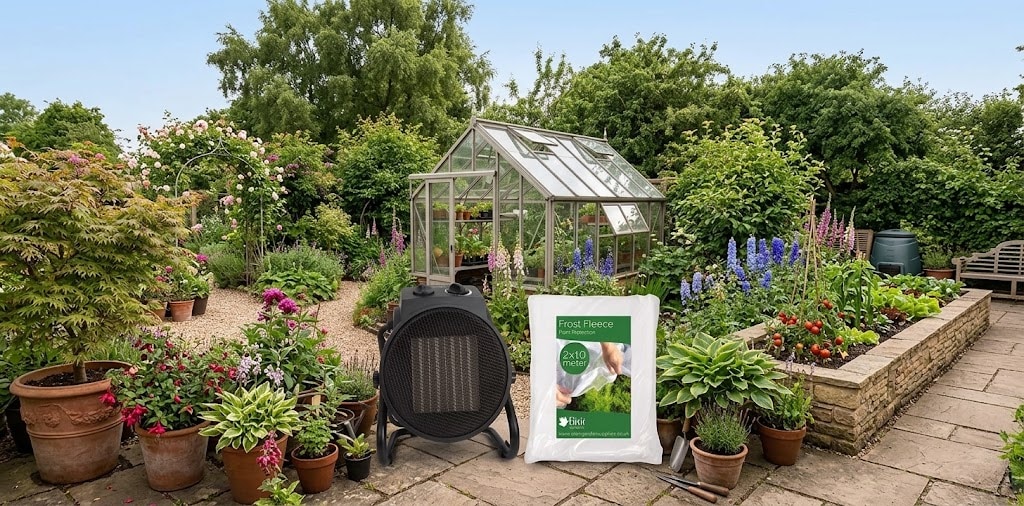
Frost Fleece and Greenhouse Heating Compared
| Feature | Frost Fleece | Greenhouse Heating |
|---|---|---|
| Produces heat | No | Yes |
| Provides insulation | Yes | Not primarily |
| Requires electricity | No | Usually, for electric heating |
| Protects individual plants | Excellent | Indirectly |
| Controls greenhouse temperature | No | Can, with suitable controls |
| Useful for short frosts | Yes | Yes |
| Maintains a defined minimum | Not reliably | Yes, if correctly sized |
| Running energy cost | None | Yes |
| Installation | Very simple | Depends on the heater |
| Prolonged cold | Limited | Potentially, if correctly sized |
| Tender plants needing frost-free conditions | Additional protection | More appropriate |
| Can be combined with the other method | Yes | Yes |
What Is Frost Fleece and How Does It Work?
Frost fleece, also called horticultural fleece, is a lightweight and porous plant covering material. When placed over or around plants, it creates a more sheltered microclimate, slows the loss of stored warmth and reduces the chilling effect of wind. It is useful outdoors, inside an unheated greenhouse and as an extra layer within a heated greenhouse during unusually cold weather.
Its protection is limited because it has no heat source. During a prolonged cold period without useful solar gain or ground warmth, the temperature beneath passive covers will continue moving towards the surrounding air temperature. Heavier material and additional layers can improve insulation, but neither turns fleece into an actively heated environment.
When Is Frost Fleece the Better Choice?
Fleece is particularly practical when the risk is brief and only a small area requires protection. It can be placed over young plants during an unexpected spring frost, wrapped around a vulnerable specimen, used to shelter soft fruit or blossom overnight, or added inside an unheated greenhouse around reasonably cold-tolerant plants. In these situations, heating the entire greenhouse may use more energy than the problem warrants.
Fleece also remains useful during a power interruption because it continues to insulate without electricity. However, it should be treated as backup protection rather than a substitute where tender plants genuinely depend on a maintained minimum temperature.
What Is Greenhouse Heating and When Is It Needed?
Greenhouse heating actively introduces heat into the growing space. It becomes more appropriate when plants cannot tolerate freezing conditions, when a frost-free environment must be maintained for weeks or months, or when controlled warmth is needed for overwintering and early-season growing. The Elixir Gardens Heating & Insulation range includes tube heaters, thermostats and root zone heating products for different growing requirements.
The temperature a heater can maintain depends on its rated output, greenhouse size, glazing condition, insulation, draughts, outside temperature and the target temperature. Wattage represents heat output and potential energy use; it does not guarantee a particular greenhouse temperature. A compact heater may provide useful frost protection in a small insulated greenhouse but struggle in a large, draughty structure during severe cold.
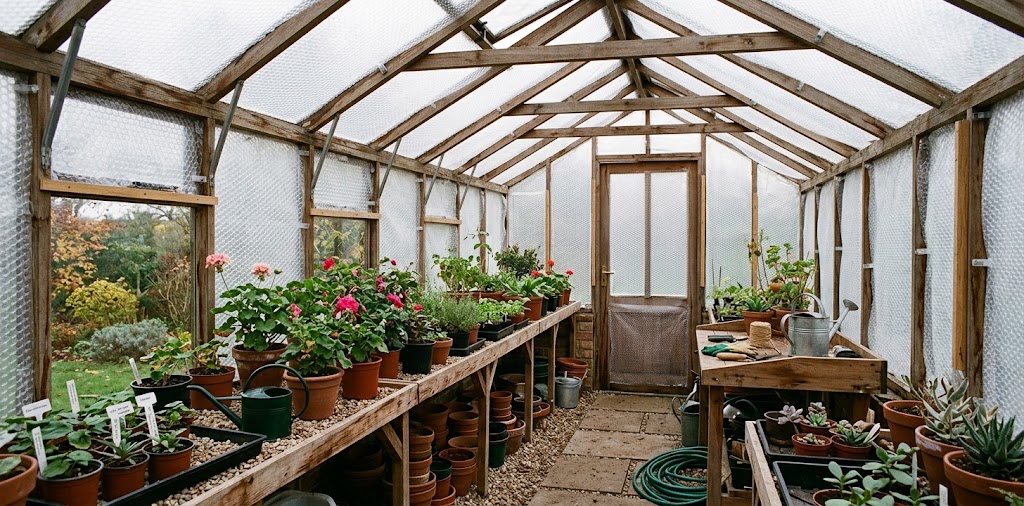
Tube Heaters for Steady Background Warmth
TH0 Tube Heater Rated Outputs
| Length | Rated Power |
|---|---|
| 50cm | 55W |
| 70cm | 90W |
| 100cm | 135W |
| 150cm | 190W |
TH0-B Tube Heater Rated Outputs
| Length | Rated Power |
|---|---|
| 30cm | 60W |
| 60cm | 120W |
| 90cm | 180W |
| 120cm | 240W |
Why Thermostatic Control Matters
A thermostat switches compatible heating according to the temperature detected at its sensing point. This helps prevent the heater running continuously when full output is unnecessary and provides more consistent frost-protection control. Elixir Gardens options include the straightforward TH-926T Analogue Plug-In Thermostat, the TH-928T Digital Plug-In Thermostat with digital controls and hot/cold functionality, and the TH-926TE Analogue Thermostat with External Probe, which allows the sensing point to be positioned away from the socket.
Sensor position can be just as important as the choice between analogue and digital control. A thermostat placed beside the heater, against cold glazing or in direct sunlight may not represent the temperature around the plants. Continue to use an independent maximum and minimum thermometer at plant level, and always check the electrical load and compatibility of the heater before connecting it to a thermostat.
Frost Fleece, Bubble Insulation and Heating
Frost fleece mainly protects plants, while greenhouse bubble insulation reduces heat loss through the structure. These products therefore complement rather than replace one another. Repair damaged glazing and reduce avoidable draughts first, then fit suitable insulation before adding more heater output. Once structural heat loss has been addressed, fleece can give the most vulnerable plants additional protection and a tube heater can provide controlled background warmth where passive methods are insufficient.
A sensible order is to repair the greenhouse, reduce draughts, insulate the structure, group vulnerable plants, add fleece and then heat only as required. This concentrates protection where it matters and reduces the amount of empty greenhouse space being heated unnecessarily.
Can Frost Fleece Reduce Greenhouse Heating Costs?
Potentially, although the result depends on how it is used. Grouping tender plants and applying fleece around that smaller area may reduce the temperature that must be maintained across the entire greenhouse. Partitioning a protected section can also reduce the volume being heated. Fleece should never touch a heater, however, and all clearances stated by the heater manufacturer must be maintained. Suitable guards can provide additional physical protection around hot surfaces where required.
Estimating Tube Heater Electricity Use
| Heater | Maximum Energy Use Per Continuous Hour |
|---|---|
| 55W | 0.055kWh |
| 60W | 0.060kWh |
| 90W | 0.090kWh |
| 120W | 0.120kWh |
| 135W | 0.135kWh |
| 180W | 0.180kWh |
| 190W | 0.190kWh |
| 240W | 0.240kWh |
Frost Fleece and Heating for Different Growing Jobs
Tender Plants and Overwintering
Reasonably cold-tolerant plants may overwinter successfully in an unheated greenhouse with local fleece protection, depending on the species and conditions. More tender plants are more likely to need an insulated greenhouse with controlled heating, while particularly valuable or vulnerable specimens can benefit from both background heat and local fleece during severe cold snaps.
Seedlings and Spring Frost
For a brief frost affecting a few trays, fleece is often the quickest and most proportionate response. Where seedlings require maintained growing temperatures rather than simple frost avoidance, controlled heating becomes more suitable. The choice should therefore be based on the temperature the crop needs, not merely whether the plants are inside a greenhouse.
Propagation and Root-Zone Warmth
When the aim is to warm seed trays or roots rather than the entire volume of greenhouse air, targeted root-zone heating may be more efficient. Elixir Gardens Soil Warming Cables used with a compatible Soil Warming Thermostat can focus warmth where germination and root development require it, avoiding the need to heat a large growing space to the same temperature.
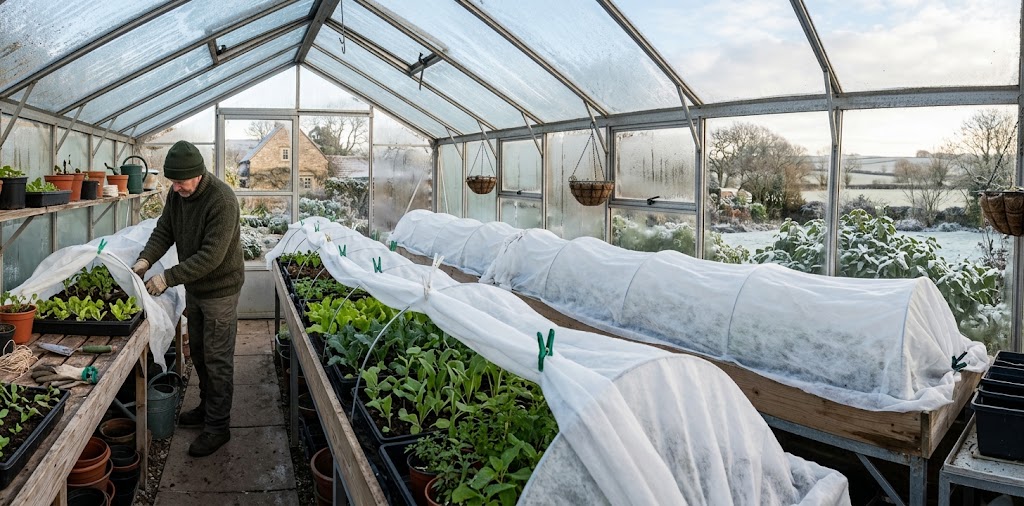
Advantages and Limitations
Frost Fleece
Fleece is simple to use, requires no electricity, has no energy running cost and works well for temporary or targeted protection. It can be stored easily, layered when additional insulation is needed and used both outdoors and inside greenhouses. Its limitations are equally important: it does not generate heat, cannot guarantee frost-free conditions, may need securing against wind and requires regular checking so that light, ventilation and pollinator access are not restricted for longer than necessary.
Greenhouse Heating
Heating actively replaces lost warmth and can support frost-free overwintering, prolonged cold-weather protection and earlier growing. With suitable controls, it offers more predictable temperature management than fleece alone. It does, however, use energy, requires appropriate electrical installation and must be correctly sized. It cannot efficiently compensate for extensive draughts, broken glazing or inadequate insulation, and it does not remove the need for sensible winter watering and ventilation.
Which Option Should You Choose?
Choose fleece when frost risk is short-lived, the plants are reasonably cold tolerant, only a few specimens need protection or electricity is unavailable. Choose greenhouse heating when tender plants require reliably frost-free conditions, cold weather is prolonged or a defined minimum temperature must be maintained. Combine both when valuable plants need extra protection during severe weather or when local insulation can reduce the amount of active heating required.
For efficient winter growing, heat the smallest practical area to the lowest temperature suitable for the plants. Avoid heating an entire greenhouse for a single tender specimen when grouping, partitioning and local fleece could concentrate protection more effectively.
A Practical Winter Protection Plan
Begin by identifying the minimum temperature needed by each plant. Repair damaged panes and close avoidable gaps, then fit suitable greenhouse insulation to reduce heat loss. Group the most vulnerable plants so that you are not protecting unnecessary empty space, apply fleece where local insulation is useful and add active heat only when passive measures cannot meet the temperature requirement.
Control compatible heating with an appropriate thermostat, such as the TH-926T, TH-928T or external-probe TH-926TE, then monitor conditions with a separate maximum and minimum thermometer. Review the setup as the weather changes rather than leaving the same level of protection in place throughout the entire season.
Common Mistakes to Avoid
The most common errors come from confusing insulation with heat production. Fleece cannot create heat, and a heater does not insulate the greenhouse. Avoid treating an indicative level of fleece protection as guaranteed, assuming two layers are equivalent to a heater or expecting a thermostat to make an undersized heater more powerful.
Other avoidable problems include heating before repairing damaged glazing, ignoring draughts, placing the thermostat in an unrepresentative position, failing to monitor plant-level temperatures and allowing fleece or plant material to touch hot heater surfaces. Ventilate during suitable mild weather and water carefully, because heating alone will not prevent every condensation, mould or humidity problem.
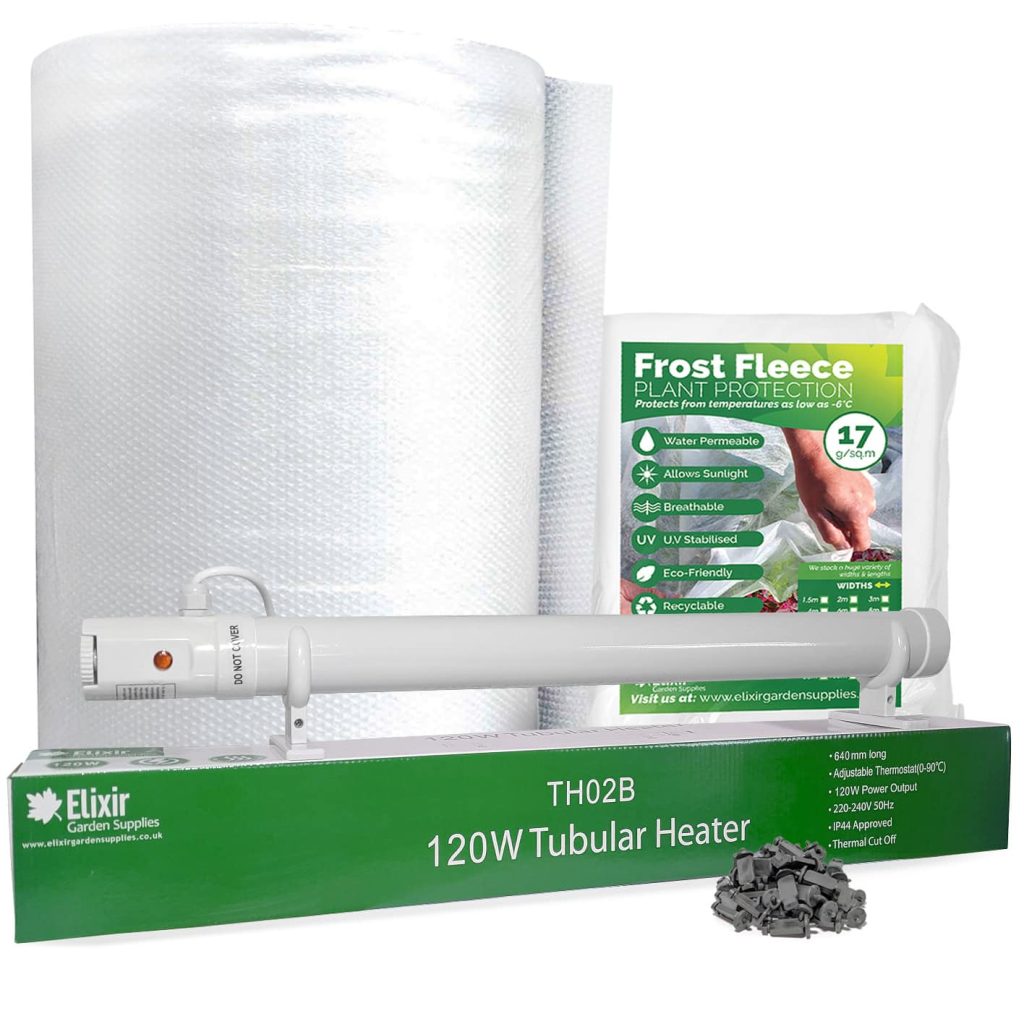
Greenhouse Frost Protection Kit
Best For:
Our Frost Protection Kit is best for Gardeners who want a complete solution for protecting greenhouse plants from cold temperatures and frost during the colder months.
Why Choose This Product:
The Greenhouse Frost Protection Kit combines tube heating with greenhouse insulation and frost fleece, helping to reduce heat loss while providing additional background warmth. It offers a convenient way to bring several elements of greenhouse winter protection together in one kit.
Recommended When:
Choose this kit when preparing a greenhouse for autumn and winter, particularly when the aim is to maintain above-freezing temperatures and protect plants from frost. It is especially useful when combined heating and insulation are preferred over purchasing individual components separately. Always follow the product instructions for installation and use.
BH-30R1 Electric Fan Heater 3kW
Best For:
The BH-30R1 is best for Greenhouses, garages, workshops and other suitable enclosed spaces that require a higher level of electric heating during colder weather.
Why Choose This Product:
The 3kW output provides a stronger source of heat than a 2kW fan heater, while the fan-assisted design helps circulate warm air around the space. This makes it a practical option when you need to raise or maintain temperatures more effectively.
Recommended When:
Use when additional heat is required during colder periods, particularly in larger or cooler enclosed areas where a 3kW heater is more suitable. Always follow the manufacturer’s instructions and ensure the heater is used in an appropriate and safe environment.

TH0 Tube Heaters with Guards & Thermostats
Best For: Providing gentle background heat and frost protection in greenhouses, sheds, workshops and other areas where maintaining a more stable temperature is important.
Why Choose This Product: The TH0 range combines tube heaters with protective guards and thermostat control, providing a practical way to manage low temperatures while helping protect plants and sensitive areas from cold conditions. The heaters are available in different sizes and wattages, making it easier to choose an option suited to the space being protected. The guards also provide an added layer of protection around the heater.
Recommended When: You need reliable background heating during colder periods, particularly for greenhouse frost protection, overwintering plants or helping maintain temperatures in small enclosed areas. Thermostat control is particularly useful when you want the heater to operate only when temperatures fall below your chosen setting.

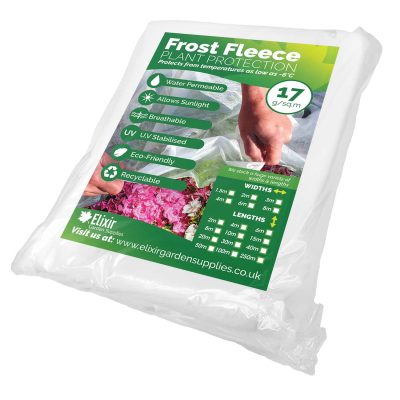
Frost Fleece Plant Protection
Frost Fleece Plant Protection
Best For: Protecting plants, shrubs, young trees and other vulnerable garden plants from frost, cold winds and harsh winter weather.
Why Choose This Product: Elixir Frost Fleece provides a simple way to add an extra layer of protection around plants during periods of cold weather. It helps shield plants from frost and drying cold winds while still allowing air and moisture to pass through. It is available in a range of sizes, including 1.5m, 2m, 3m, 4m, 6m and 8m lengths, making it suitable for protecting individual plants as well as larger areas.
Recommended When: Temperatures are expected to fall below freezing, during periods of cold or drying winds, or when protecting less hardy plants through autumn and winter. It can also be useful for giving newly planted or particularly vulnerable plants additional protection during periods of unsettled winter weather.

Summary
Frost fleece and greenhouse heating should not be treated as competing versions of the same product. Fleece offers passive, local protection; heating actively replaces lost warmth; insulation reduces structural heat loss; and a thermostat controls when compatible heating operates. Understanding those separate roles makes it much easier to build a winter-protection system that suits the plants rather than simply adding more equipment.
For temporary local protection, begin with fleece. For steady background warmth, consider an appropriately sized TH0 or TH0-B Tube Heater. Where a defined minimum temperature matters, add a suitable analogue, digital or external-probe thermostat and verify performance independently. Further practical guidance is available in the Elixir Gardens Advice Centre.
Frequently Asked Questions
Can Frost Fleece Replace a Greenhouse Heater?
Not when plants require a defined minimum temperature that passive protection cannot reliably maintain. Fleece remains useful as an additional insulating layer alongside controlled heating.
Can Frost Fleece Keep a Greenhouse Frost-Free?
It can reduce frost risk but cannot guarantee frost-free conditions during severe or prolonged cold. A correctly sized heating system is more appropriate where a reliable minimum temperature is essential.
Can I Use More Than One Layer of Fleece?
Yes. Additional layers can improve insulation, provided plants still receive appropriate light and ventilation. Multiple layers remain passive protection and do not generate heat.
Should I Insulate Before Heating?
Yes, where practical. Repairing damage, reducing draughts and fitting suitable insulation reduces avoidable heat loss, allowing the heater to work more effectively.
Do I Need a Thermostat and a Thermometer?
They perform different jobs. The thermostat controls compatible heating, while a separate maximum and minimum thermometer verifies the conditions the plants actually experience.
Can I Use Fleece with a Tube Heater?
Yes, as separate parts of a layered winter-protection system. Never drape fleece over a heater or allow it to contact hot surfaces, and always maintain the required clearances.
What Is the Most Efficient Approach?
Reduce structural heat loss first, group vulnerable plants, add local fleece, heat only the area that genuinely requires it, use suitable temperature control and monitor the result.
Follow the Instructions
Every gardening product is designed to be used in a specific way. Always read the product label and follow the manufacturer’s instructions before use. Correct preparation, application and timing help ensure the best possible results while promoting safe and responsible use.
Wear Appropriate PPE
Some products may require suitable personal protective equipment (PPE) during handling or application. Depending on the product, this may include gloves, eye protection or protective clothing. Always check the product label to determine the recommended safety precautions before use.
Application Rates
Using more product than recommended will not usually improve performance and may lead to unnecessary waste or undesirable results. Measure accurately, apply evenly and follow the recommended application rates and guidance provided on the product label.
Rhys Nield
As one of our resident product experts, Rhys has spent the last 2 years helping keen gardeners and growers from within our customer services department. Remember to save this page, or visit the Advice Centre, for the latest tips, articles, and expert knowledge, to help you make your garden the best it can be.




About Elixir Gardens Supplies
For over 35 years Elixir Garden Supplies have been providing gardeners with all the essentials they need to achieve growing.
Our online store makes sure that all our customers have access to the information they need to make the right decisions when choosing the products they need for their gardens. We know from experience that gardening means many different things to our customers. Whether you have a balcony, patio, lawn or allotment, Elixir Gardens are proud to supply both amateur and professional gardeners alike.
We regularly use our many years of experience to developed our exclusive formulations in specialist fertilisers. Many of these have stood the test of time and have become firm favourites with amateurs and professionals alike. In fact our knowledge of fertilisers, feeds and garden care is well known within gardening circles. But don’t just take our word for it, why not check out the thousands of fantastic reviews on Trustpilot.
