Solubles & Biostimulants
For August Chris takes us through using soluble fertilisers & soil bio-stimulants in the garden for the perfect summer crops!
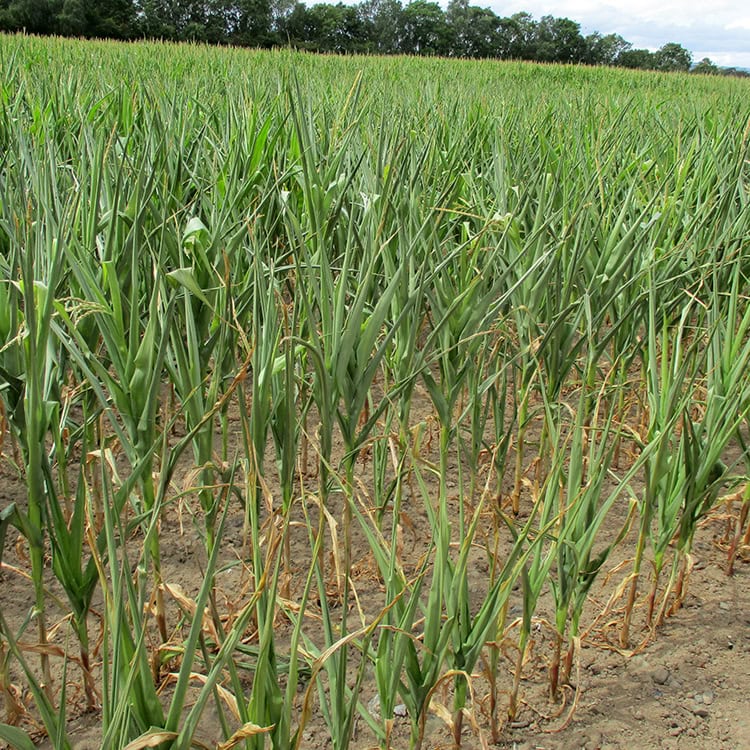
As we move into the last month of summer the prolonged drought has really taken its toll on the garden. Crops have become very stressed and, on my sandy soil its been a constant battle to ensure the soil does not dry out to the point where thirty plus degrees of heat stresses the crop so much that yields are severely affected. Surrounding fields of Maize have become so severely drought stressed that they now resemble yuccas with their leaves tightly rolled up to conserve as much moisture as possible. They are even beginning to show the male flowers (tassels) at barely two feet tall when normally they would be showing at around six to eight feet.
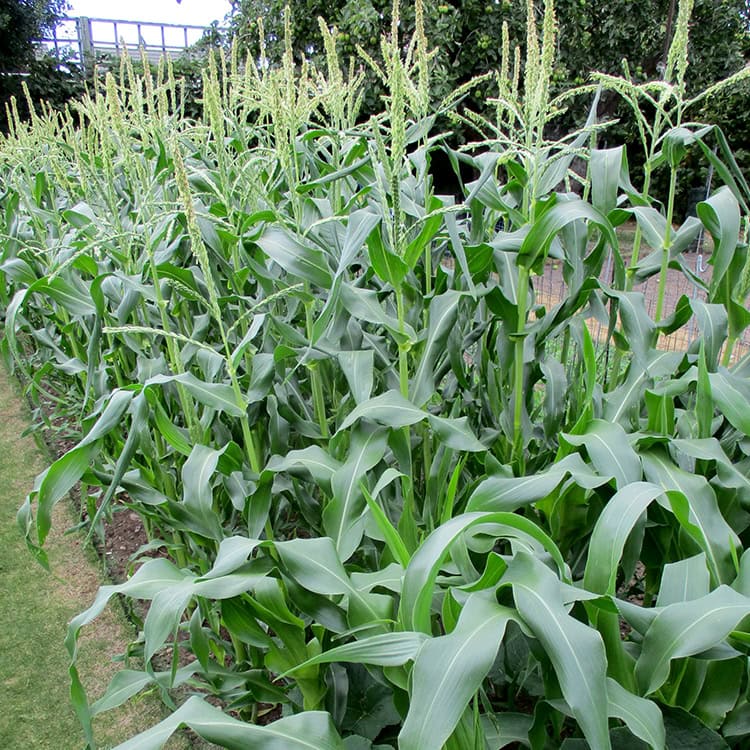
My sweetcorn although appearing to grow normally decided to also ‘tassel’ at about one and a half foot high, a situation that would result in very small cobs. This was undoubtedly due to a very high initial growth rate, dry soil and depletion of seedbed Nitrogen due to me not top dressing them as growth progressed. Sweetcorn are very greedy plants and the value of organic manures such as well rotted farmyard manure or chicken manure cannot be over stated for sweetcorn to provide a source of Nitrogen over a long period. Indeed, maize and sweetcorn will use about a third of its Nitrogen requirement post tassel stage in the production of cobs so any shortage will mean smaller cobs and ones which are less filled out with kernels.
My situation called for some emergency Nitrogen treatment and this is where soluble fertilisers are really valuable to the gardener – Elixir’s Bumper Crop High Nitrogen Soluble Fertiliser (23-5-11) came to the rescue. I used a rate of 10 grams in 5 litres of water (2grams per litre) and applied this to 24 plants with two applications at two- week intervals. The results were pretty much instantaneous, the plants greened up and grew about a foot in the first week! They now resemble nearly normal height for the growth stage and I think will be able to support a crop of almost normal sized cobs.
Soluble fertilisers of course also form the bulk of the nutrition for the season for a range of greenhouse crops as it is practically impossible or desirable to put all of the feed into the compost at planting as many greenhouse crops require different amounts of the major plant nutrients at different growth stages.
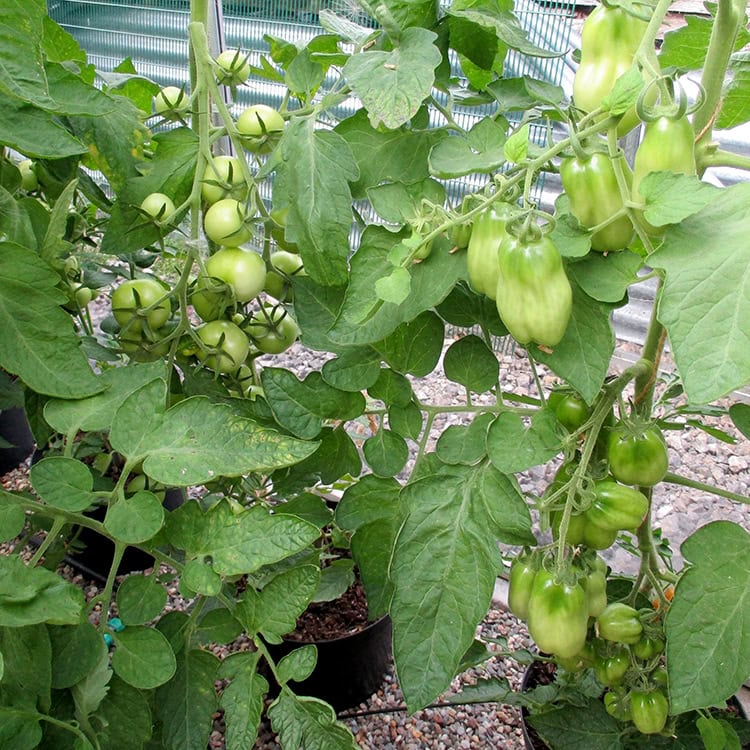
For my tomatoes I use 10 grams of Bumper Crop Soluble Tomato Feed (9-15-38) in 5 litres of water and feed 3 tomato rings with this solution, once per week from when the tomatoes on the first truss have set and are swelling. As my tomatoes are grown in ring-culture I use double the recommended rate as each plant is totally reliant on the nutrition in 7.5 litres of compost for all of their nutritional needs. A higher rate also acts as an osmotic brake and prevents the plant from taking up too much water in the early stages of growth, this slightly stresses the plant, slows vegetative growth and increases reproductive growth which results in much less space between trusses and increased fruit setting.
It’s a technique commercial growers use to increase fruit set on the first and second trusses which can often be slow to set or even abort due to luxury vegetative growth. Later in the season when at least four trusses have formed the plant is under some natural stress by the developing fruit and there is a real danger of the growing tip running out of Nitrogen and growing poorly. At this point I switch to Bumper Crop High Potassium feed (15-5-30), for its higher Nitrogen content for alternate feeds to ensure vegetative growth is maintained and balanced against the fruiting phase.
The High Potassium feed is applied at exactly the same rate as the soluble Tomato Feed, and by using both feeds as the bulk of the nutritional requirements the tomato leaves stay healthy, upward growth and flower development is maintained and adequate supplies of potassium and magnesium are available to feed and ripen the developing fruit.
For me the biggest benefit of soluble fertilisers is their ability to act fast and to bring about immediate changes in crop growth, they are adaptable to the stage of growth and can be tailored to specific crop needs as plants change from vegetative growth to fruiting and a big bonus is they are economical especially when bought in bulk.
But there are another group of products we tend to use as fertilisers whose primary benefit for the home gardener is to act on plants to bring about changes to the plant’s metabolism, many work in ways many of which we are only beginning to understand these are collectively termed Bio-stimulants.
Seaweed is probably the best known Bio-Stimulant, but others include Humic and Fulvic acids and bacterial bio-stimulants based on bacteria such as Bacillus aquafaciens and Bacillus subtilis. All help to increase nutrient uptake and metabolism, help the plant to overcome environmental stress and in the case of Bacterial Bio – Stimulants help the plant combat soil borne pathogens by forming a protective layer around root hairs. For me, seaweed is the bio-stimulant of choice; to supplement a nutrition programme but some will use it as the only source of nutrients for their plants. Seaweed has very low levels of Nitrogen, Phosphorous and Potassium, too low for most crops to make economic use of, but seaweed has a secret weapon, it is packed with trace elements and plant hormones such as cytokinin’s and auxins which help with plant cell initiation and division. As it’s a natural product Seaweed has huge benefits for soil life whether used as a liquid or as seaweed meal it is an excellent way to help bring a depleted soil back to life.
The biggest benefit however of seaweed is to supply trace elements to the plant. When used as a foliar feed it quickly stimulates the plant and kicks starts the plants metabolism to maximise the extraction of nutrients (fertilisers and nutrients supplied by organic manures) applied to the soil, which directly relates to bigger, healthier crops.
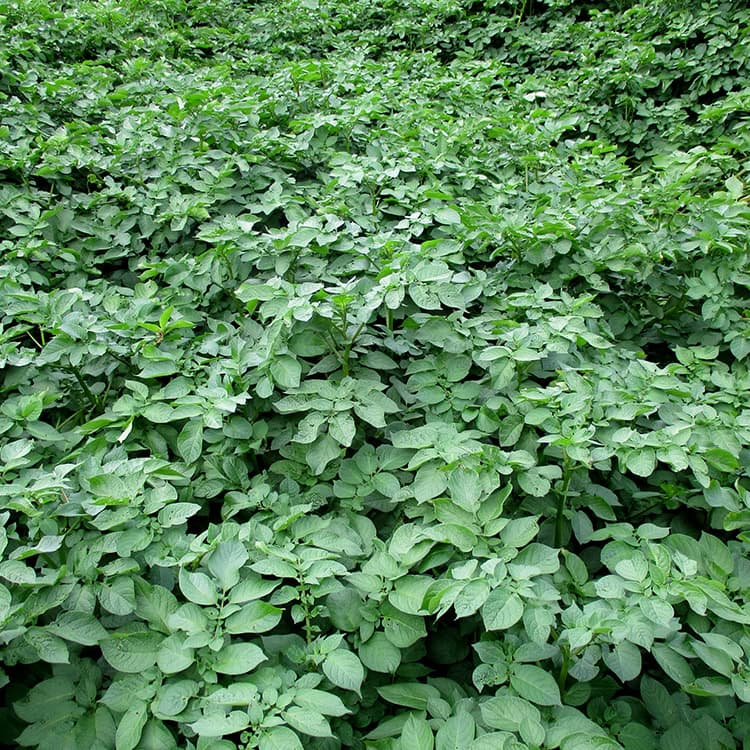
Many studies have shown that foliar feeding seaweed at the recommended rate on Potatoes will dramatically increase yield. I apply three applications of seaweed as a foliar feed on my maincrop potatoes, I spray the first at tuber initiation (just before flowering) and then at three weekly intervals. I always make sure the plants are well irrigated prior to application as you need the leaves in good condition and not wilting to take in the seaweed. I spray in the evenings to avoid any risk of sun scorch and avoid any rainfall which can wash the spray off before its absorbed.
The results on potatoes are quite dramatic, I left part of a row unsprayed a few years ago and after about two days there was a visible light green patch in a bed of very dark green healthy leaves, at harvest the unsprayed area yielded about a third less than the seaweed treated plants.
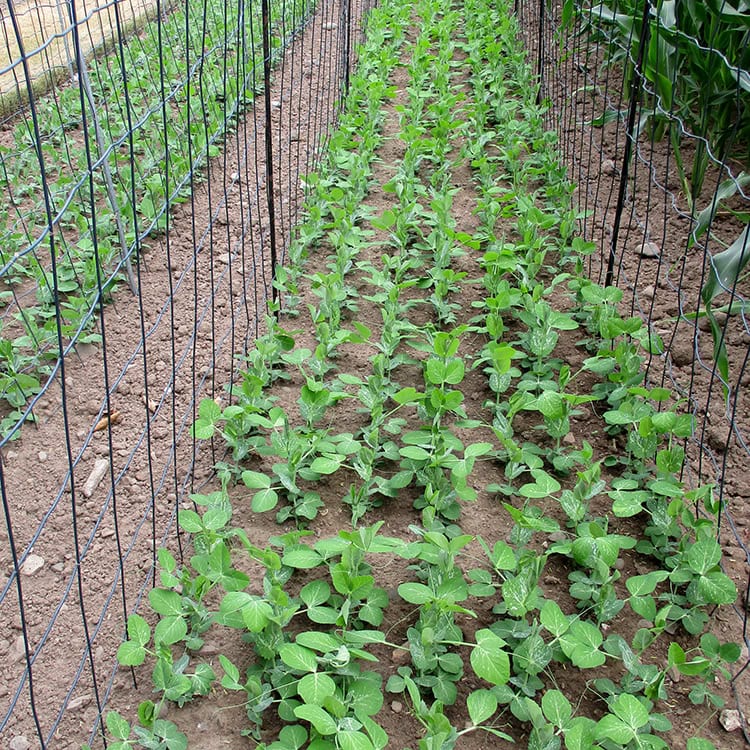
I also regularly use Hebridean Organic Liquid Seaweed Fertiliser on all crops. On peas it is the only nutrition they receive as there is adequate Phosphorous and Potassium levels in the soil, Peas will make all of their own Nitrogen from the air via the Rhizobium bacteria on their roots, seaweed provides a micro nutrient rich bio- stimulant affect to maintain health and speed growth. Its a natural source of Manganese a trace element needed by peas to avoid marsh spot which is often deficient on sandy soils particularly in times of drought. Marsh Spot results from a manganese deficiency and causes the centre of the individual peas to develop dark brown spots.
This year my Peas are all of the cultivar ‘Terrain’ which were sown on the 9th of July and should crop towards Mid- September onwards. This Downy and powdery mildew resistant cultivar is excellent for late sowings where it supplies a substantial picking for the freezer as well as a prolonged pick right into November.
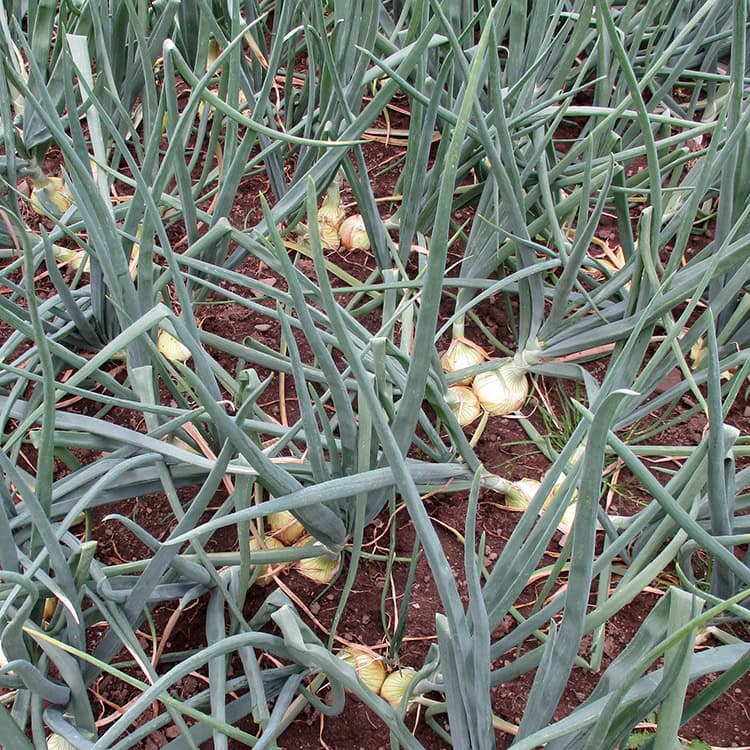
Onions also respond well to bio-stimulants, mine have received three sprays of seaweed. They are now bulbing up nicely and are now at the stage of growth where feeding / watering should be stopped to help avoid storage rots. Watering has been a ‘balancing act’ with the heat this year. There is a great need to keep watering to stop the onions ‘necking over’ too early from drought related stress when they could grow for a few more weeks, and giving them too much water which will lead to a lot of moisture in the bulbs which can contribute to storage rots. This year my onions and shallots have also received a Bacteria based bio-stimulant, primarily to help reduce root diseases, at the moment the crop looks healthy but I won’t know how well it has worked until the crop is lifted.
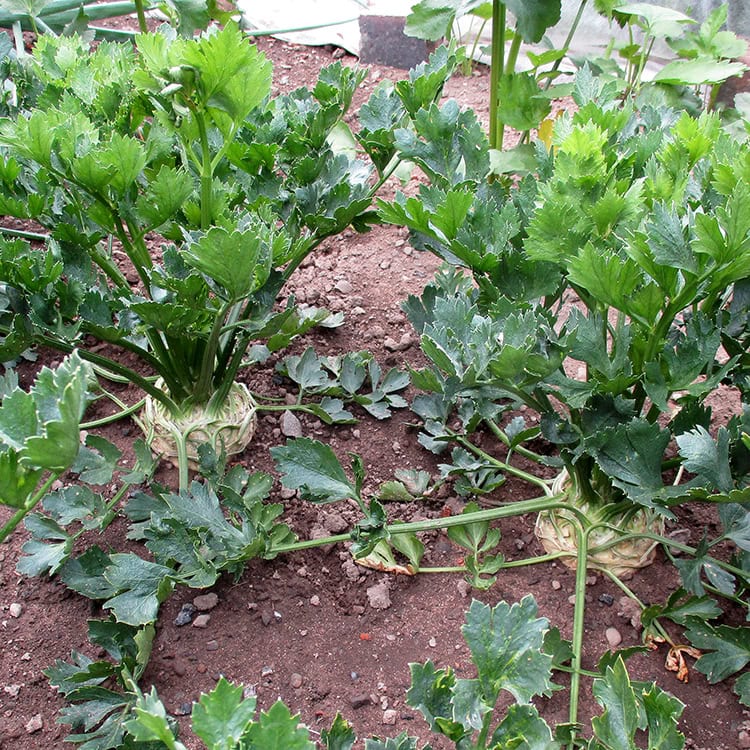
And finally, the return of an old favourite for 2026. I have not grown Celeriac for many years as this moisture loving vegetable really does not like my sandy soil but the cultivar ‘Monet’ seems to be thriving. It’s received the same nutrition that I give my carrots and three applications of seaweed foliar feed. Since the first application of seaweed the Celeriac changed appearance literally overnight. The foliage turned to a deep green colour and is visibly shiny in appearance. They have just started to form their characteristic bulbous root, so fingers crossed for non-woody roots later in the year!
For me the value of both soluble fertilisers and bio-stimulants can mean the difference between a average crop and an exceptional one. Crops grown in the greenhouse are largely dependent on soluble fertilisers throughout the cropping period with very little nutrition given in the compost. In the garden the reverse is true, granular and powder fertilisers in combination with organic manures make up individual ‘recipes’ to grow the crop and soluble fertilisers are the essential rescue package or the foliar feed given to correct a deficiency.
I view bio-stimulants on an equal basis of importance to fertilisers, products such as natural seaweeds are extremely valuable as foliar feeds maintaining foliage in the best possible condition to provide the plant with energy to effectively maximise the uptake of nutrients and convert to either further vegetative growth or storage carbohydrates. As pesticides reduce in number Bacterial Bio-stimulants are increasing in their importance and becoming an essential component of new era of pest and disease control in Horticulture.

Chris Jones
Based in Shropshire Chris has many years experience both in growing projects of his own and passing on his expert outdoor knowledge to others through growing and gardening societies. Keep an eye on our blog posts and newsletters for his seasonal articles to keep you well informed on all things outdoors.



About Elixir Gardens Supplies
For over 35 years Elixir Garden Supplies have been providing gardeners with all the essentials they need to achieve growing.
Our online store makes sure that all our customers have access to the information they need to make the right decisions when choosing the products they need for their gardens. We know from experience that gardening means many different things to our customers. Whether you have a balcony, patio, lawn or allotment, Elixir Gardens are proud to supply both amateur and professional gardeners alike.
We regularly use our many years of experience to developed our exclusive formulations in specialist fertilisers. Many of these have stood the test of time and have become firm favourites with amateurs and professionals alike. In fact our knowledge of fertilisers, feeds and garden care is well known within gardening circles. But don’t just take our word for it, why not check out the thousands of fantastic reviews on Trustpilot.
